

You turn the key or press the start button, expecting your car to fire up as usual. Instead, the engine cranks slowly or nothing happens at all. A weak or dead battery can disrupt a commute, leave you stuck in a parking lot, or derail plans at the worst possible time. For drivers in Alexandria, where daily travel often means busy local streets, stop-and-go traffic, and frequent short trips around Northern Virginia, knowing the early signs of battery trouble can help prevent an unexpected breakdown.
Pinecrest Shell & Auto Repair provides professional auto repair in Alexandria, VA, including battery checks, electrical system diagnostics, battery replacement, and routine vehicle maintenance for domestic and imported vehicles. Rather than waiting until your vehicle refuses to start, a battery inspection can help determine whether the problem is the battery itself, its connections, the alternator, or another part of the starting and charging system. This guide explains the most common warning signs of battery failure, why batteries wear out, how technicians test them, and when replacement makes more sense than waiting.
Table of Contents
- What Are the Warning Signs of a Failing Car Battery?
- Why Do Car Batteries Fail Sooner Than Expected?
- How Can You Tell Whether the Battery or Alternator Is the Problem?
- When Should You Have Your Car Battery Tested or Replaced?
- Frequently Asked Questions
What Are the Warning Signs of a Failing Car Battery?
Battery problems do not always begin with a completely dead vehicle. In many cases, drivers receive smaller warnings first. Paying attention to changes in how your car starts or how its electrical equipment behaves can give you time to schedule service before the battery leaves you stranded.
One of the most recognizable symptoms is slow engine cranking. If the engine takes longer to turn over than it did previously, the battery may no longer be supplying enough starting power. Clicking when you turn the key or press the start button can also point to a weak battery, poor electrical connection, or another starting-system problem. AAA lists slow cranking, clicking sounds, electrical issues, dim headlights, frequent jump-starts, and visible battery damage among common signs that a battery may need attention.
Other symptoms worth watching include:
- Dim or flickering headlights
- Interior lights that appear weaker than usual
- Slow power windows or other electrical accessories
- A battery or charging-system warning light
- Repeated need for jump-starts
- Corrosion around the battery terminals
- A swollen, cracked, or bulging battery case
- An unusual sulfur or “rotten egg” odor near the battery
A battery with visible swelling, cracks, or an unusual odor should be inspected promptly rather than handled unnecessarily. These symptoms can indicate battery damage, overheating, or leakage.
Why Do Car Batteries Fail Sooner Than Expected?
Car batteries are wear items. Even a vehicle that receives regular maintenance will eventually need a replacement battery because its ability to store and deliver electrical energy decreases over time.
Most conventional car batteries typically last about three to five years, although actual service life depends on climate, driving habits, vehicle demands, and maintenance. AAA recommends paying closer attention once a battery reaches approximately three years of age and having it tested regularly rather than assuming it will continue working reliably.
Driving habits can also affect battery life. Frequent short trips can be hard on a battery because starting the engine requires significant electrical energy. The alternator recharges the battery while the engine runs, but very short drives may not always provide enough operating time to fully replenish the energy used during startup.
Temperature is another factor. Heat accelerates chemical reactions and internal battery deterioration, while very cold weather can reduce available starting power and make an engine harder to crank. Although Alexandria experiences four distinct seasons rather than year-round temperature extremes, summer heat and cold winter mornings can expose a battery that is already losing capacity.
Corroded or loose terminals can cause problems as well. The battery may still contain usable energy, but poor connections can interfere with electrical flow. During routine vehicle maintenance, technicians can inspect the battery, terminals, cables, and other components for signs that attention is needed.
How Can You Tell Whether the Battery or Alternator Is the Problem?
A car that will not start does not automatically need a new battery. The battery works as part of a larger starting and charging system, and similar symptoms can be caused by the alternator, starter, cables, connections, or an electrical drain.
The battery supplies the electrical power needed to start the engine. Once the engine is running, the alternator produces electricity and replenishes the battery’s charge. If the alternator is not charging properly, even a relatively healthy battery can eventually become discharged.
This is why replacing a battery based only on symptoms can sometimes fail to correct the actual problem. For example, if a newly charged or replaced battery repeatedly loses power, the charging system or another electrical component may need diagnosis. A battery warning light also deserves attention because it can indicate a charging-system problem rather than simply an aging battery.
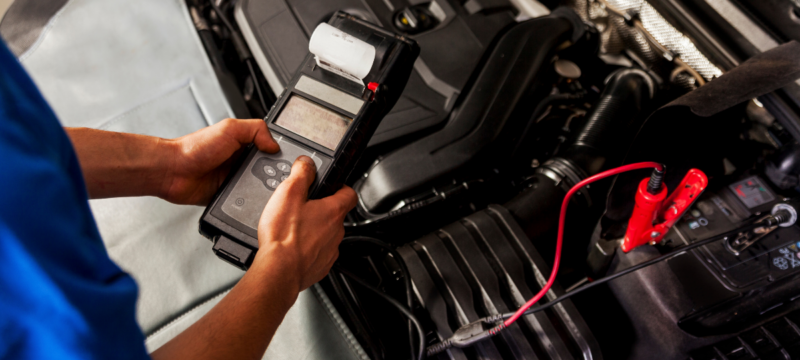
Professional testing can help separate these possibilities. Pinecrest Shell & Auto Repair uses diagnostic equipment to evaluate vehicle problems and provides electrical system diagnostics and battery replacement as part of its auto repair services in Alexandria. Testing before replacing parts helps identify the source of the starting problem and reduces unnecessary repairs.
When Should You Have Your Car Battery Tested or Replaced?
Do not wait for complete battery failure before thinking about replacement. If your battery is approaching three years old, knowing its condition becomes increasingly important. AAA recommends having batteries tested annually once they reach their third year because testing can identify deterioration before the battery becomes unable to start the vehicle.
Testing is particularly worthwhile before periods when you depend heavily on your vehicle, such as a long road trip or a season of regular commuting. You should also schedule a check if you notice slow starting, dim lights, corrosion, electrical problems, or repeated jump-starts.
Battery age should be considered together with test results and symptoms. A three-year-old battery that tests well may not need immediate replacement. A battery of the same age that struggles to hold a charge, repeatedly requires a jump, or performs poorly during testing may be nearing the end of its useful life.
Preventive maintenance provides another opportunity to check battery condition. Pinecrest Shell & Auto Repair’s scheduled maintenance services include battery-related care along with other inspections designed to help identify vehicle problems before they result in a breakdown.
For Alexandria drivers, that proactive approach can mean addressing a weakening battery at the repair shop instead of discovering the problem when the vehicle will not start.
Frequently Asked Questions About Auto Repair in Alexandria, VA
How do I know if my car battery is about to die?
Common warning signs include slow engine cranking, clicking when attempting to start, dim or flickering lights, electrical accessories behaving unusually, corrosion around the terminals, and frequent jump-starts. Some batteries fail with few obvious symptoms, so testing becomes increasingly useful as the battery ages.
How long does a car battery usually last?
Most conventional car batteries last approximately three to five years, although climate, driving habits, vehicle electronics, and maintenance can affect their lifespan. If your battery is three years old or older, periodic professional testing can provide a better picture of its remaining condition than age alone.
Does a slow start always mean I need a new battery?
No. Slow starting can indicate a weak battery, but problems involving battery connections, the starter, alternator, or other electrical components can produce similar symptoms. A professional diagnostic test can help determine what is causing the starting problem before parts are replaced.
Can a car battery die even if the lights still work?
Yes. Headlights, dashboard lights, and other accessories require much less power than the starter motor. A weakened battery may still have enough energy to operate lights or electronics but not enough starting power to crank the engine successfully.
Should I replace my battery before it completely dies?
Replacement may be worthwhile when testing shows substantial deterioration, especially if the battery is several years old or has begun causing slow starts and repeated jump-starts. Replacing a battery based on its actual condition can reduce the chance of an unexpected no-start situation while avoiding premature replacement.
Conclusion
A dead battery may seem to happen suddenly, but slow starts, electrical changes, warning lights, corrosion, and repeated jump-starts can provide valuable clues beforehand. Knowing your battery’s age and having it tested periodically can help you catch declining performance while you still have time to address it on your schedule.
Pinecrest Shell & Auto Repair has served the community for more than 30 years and provides full-service auto repair in Alexandria, VA for vehicles of all makes and models. Its ASE-certified technicians handle battery replacement, electrical diagnostics, scheduled maintenance, and a broad range of automotive repairs, giving local drivers one place to address both routine maintenance and unexpected vehicle problems.
If your vehicle is cranking slowly, showing a battery warning light, or needing more jump-starts than usual, don’t wait until it refuses to start. Contact Pinecrest Shell & Auto Repair to have your battery and related systems checked by experienced technicians. Schedule your service and find out what your vehicle needs before a weak battery turns into an inconvenient breakdown.
Leave a Comment